
How Meta Compute Is Reshaping AI Infrastructure for Business
Rising demand for AI power is quietly rewriting what it takes to stay competitive. As companies lean harder on advanced AI models, Meta’s new Meta Compute initiative signals just how big the shift in AI infrastructure and data center capacity is becoming for every business that wants to scale with confidence.
Breaking Down the Meta Compute Initiative
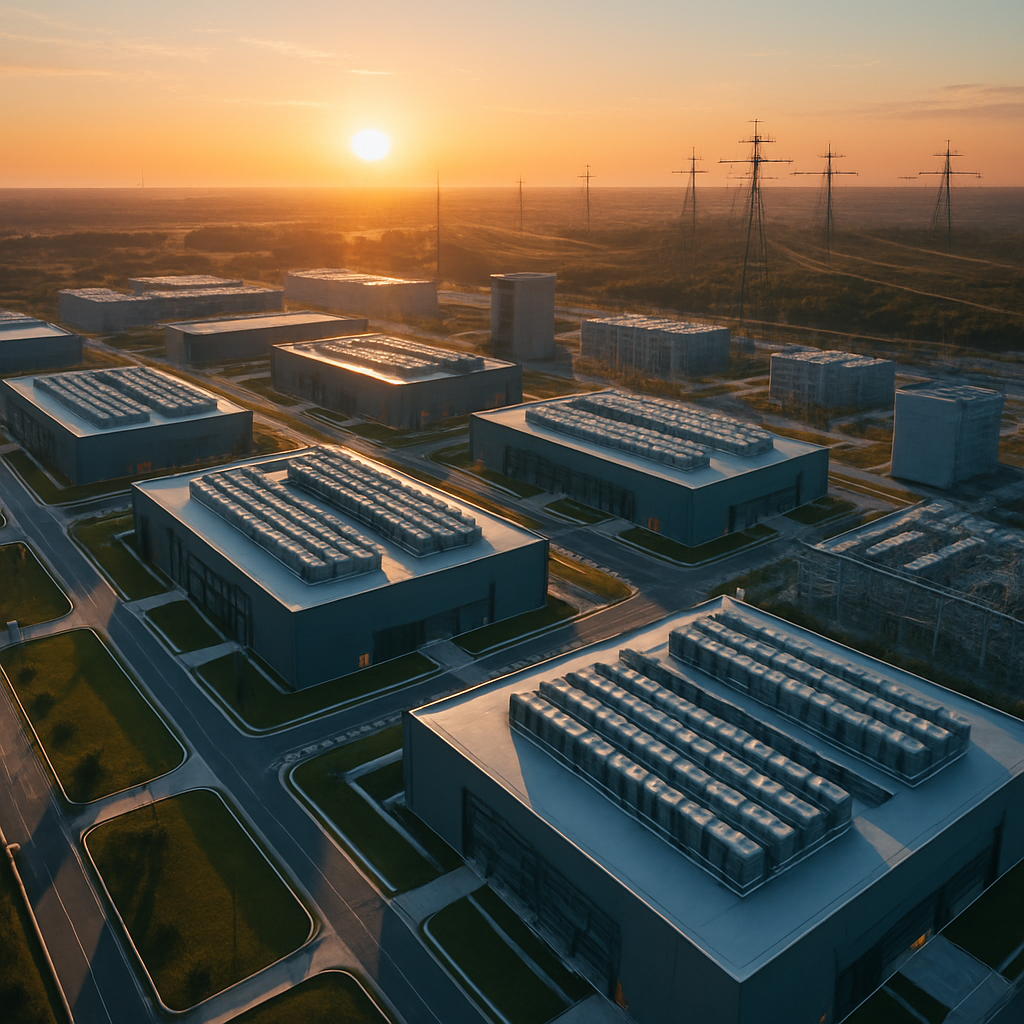
Meta Compute is Meta Platforms’ push to massively expand the AI infrastructure that powers its current and future advanced AI models. The company plans to build tens of gigawatts of data center capacity this decade and aims for hundreds of gigawatts over time. This signals a long-term commitment to AI compute as a core strategic asset.
With capital expenditures projected to exceed $100 billion in 2026, Meta is treating AI compute as a foundational layer for innovation, engagement, and product development. Government partnerships, led by Dina Powell McCormick, will focus on infrastructure financing and deployment—key levers for turning massive AI investments into sustainable, scalable platforms that enterprises can ultimately learn from and align with.
Key Concepts in Meta’s AI Infrastructure Strategy
To understand why Meta Compute matters for your business, it helps to translate a few core ideas into practical terms:
- AI infrastructure: The combined hardware, data centers, networks, and systems required to run advanced AI models reliably and at scale. Think of it as the factory floor for digital intelligence.
- Data center capacity: The power, cooling, space, and compute resources that determine how much AI workload you can run. Tens of gigawatts mean enormous headroom for training and deploying AI systems.
- AI compute: The processing power behind everything from recommendation systems to generative AI. More compute unlocks more complex models and richer experiences for users and customers.
- Capital expenditures: Long-term investments in infrastructure that build durable advantage. Meta’s $100+ billion commitment shows how seriously leading players now treat AI infrastructure.
- Government partnerships and financing: Collaboration that helps remove bottlenecks—regulatory, financial, and operational—so infrastructure expansion can move faster and more efficiently.
For your organization, these concepts translate into clearer expectations: AI at scale requires thoughtful investment, resilient infrastructure, and smart partnerships, not just a single model deployment.
5 AI News Stories Shaping the Future of AI Infrastructure
1. Meta Compute: Tens of Gigawatts of Data Center Capacity This Decade
Meta Platforms has launched Meta Compute, a long-term initiative to build tens of gigawatts of data center capacity in the coming decade, eventually targeting hundreds of gigawatts. This expansion is designed to support increasingly advanced AI models across Meta’s ecosystem. CEO Mark Zuckerberg emphasized that how Meta engineers, invests, and partners around AI infrastructure will become a strategic advantage. For enterprises, this underscores a clear trend: AI leadership is no longer about individual model performance alone—it depends on the scale, reliability, and efficiency of the infrastructure that sits underneath every AI-powered experience.
2. AI Infrastructure as a Strategic Advantage for Advanced AI Models
Meta’s framing of AI compute as a strategic differentiator highlights a critical shift in how businesses should think about AI. Rather than treating AI tools as add-ons, Meta Compute treats AI infrastructure as a core competitive asset—similar to logistics for retailers or manufacturing capacity for industrial companies. As advanced AI models become more capable and data-hungry, organizations that plan for scalable, efficient data center capacity and cloud or hybrid architectures will be better positioned to launch new AI-driven services, automate workflows, and personalize engagement at scale. The strategic lesson: your AI roadmap needs an infrastructure roadmap right alongside it.
3. Capital Expenditures Above $100 Billion Signal Long-Term AI Investment
Meta’s plan for capital expenditures exceeding $100 billion in 2026 is more than a budget headline—it is a signal to the market about the magnitude of AI’s long-term impact. Such spending is directed toward expanding AI infrastructure, including data center capacity and AI compute resources. For enterprises, this level of investment validates AI as a multi-decade transformation, not a short-term trend. It also sets expectations for cost structures: AI initiatives at scale require thoughtful CapEx and OpEx planning, vendor strategies, and alignment between technology and finance teams to ensure that spending translates into clear business outcomes like improved productivity, better targeting, and new revenue streams.
4. Government Partnerships to Accelerate Infrastructure Financing and Deployment
Meta has tapped Dina Powell McCormick, its President and Vice Chair, to lead government partnerships focused on infrastructure financing and deployment for Meta Compute. These collaborations are designed to help unlock capital, streamline regulatory pathways, and enable faster build-out of AI infrastructure and data center capacity. For businesses, this underscores how public–private alignment can reduce friction in large-scale AI projects, from energy availability to permitting and connectivity. It also reflects a broader pattern: as AI infrastructure becomes more central to economic competitiveness, coordination between enterprises, investors, and governments will shape where and how quickly AI compute grows.
5. From Consumer Platforms to Enterprise Signals: Meta Compute’s Market Impact
While Meta Compute is primarily framed around Meta’s own ecosystem, its scale sends a strong signal to the broader enterprise market. When a company commits tens of gigawatts of data center capacity and more than $100 billion in capital expenditures to support advanced AI models, it raises the bar for expectations across industries. Vendors, cloud providers, and large enterprises will calibrate their own AI infrastructure and AI compute strategies in response. For your organization, this creates both opportunity and pressure: partnering wisely, choosing scalable platforms, and aligning AI initiatives with infrastructure realities become essential steps in staying competitive.
Why This Matters for the Future of Work and Enterprise AI
Meta Compute is not just a technology story; it is a blueprint for how AI will reshape the future of work and enterprise strategy. By prioritizing AI infrastructure, data center capacity, and long-term AI compute investments, Meta is showing that meaningful AI transformation rests on robust foundations. For your business, this has several implications.
First, AI adoption moves from isolated pilots to integrated capabilities. As advanced AI models become more accessible through platforms influenced by initiatives like Meta Compute, you can embed AI into workflows—customer support, marketing optimization, content operations, risk monitoring—without owning mega-scale infrastructure yourself. The key is selecting partners and tools that inherit the benefits of this new wave of investment.
Second, infrastructure strategy becomes part of business strategy. Even if you are not building data centers, you are making decisions about where workloads run, how data is managed, and which vendors you trust to provide resilient AI compute. Watching how Meta structures its investments, partnerships, and financing can inspire more disciplined conversations between your technology, operations, and finance leaders.
Finally, competitive advantage will increasingly come from how well you orchestrate people, processes, and AI systems on top of this infrastructure. Organizations that align skills, governance, and experimentation with the growing power of advanced AI models will be best positioned to unlock productivity gains and new value.
Conclusion and Next Steps
Meta’s Meta Compute initiative illustrates just how central AI infrastructure, data center capacity, and long-term AI compute investments have become to digital competitiveness. Tens of gigawatts of capacity and more than $100 billion in capital expenditures are a clear signal: leading organizations are betting big on AI as a lasting driver of growth and differentiation.
For your business, the opportunity is to translate these signals into practical steps—clarifying your AI vision, aligning it with infrastructure realities, and choosing partners who can help you scale responsibly. If you’re ready to map how AI can support your workflows, teams, and growth strategy, we’re here to help. Contact us to explore how a thoughtful AI roadmap and infrastructure-aware approach can position you for the future of work.